Through the Eyes of Uncle Saul

My Uncle Saul taught me how to play gin. Not just the basic rules of the game, but when to take risks to get a card to complete a hand; and when a hand held little promise for success, the defensive strategy that had to be used to limit a loss. Along the way I was tutored in the finer points of “gamesmanship”. How to distract an opponent with gab, a well placed insult or a condescending comment meant to lull an adversary into a false sense of security.

I can imagine Saul laying waste to his card playing buddies.

Saul also fed my curiosity about dinosaurs. Many a Saturday afternoon, with an egg capturing net in hand, we would go on a dinosaur egg hunting expedition in the acres around his home in Woodbury. Along the way we would find butterflies, crickets & a diversity of birds, for which Saul could speak at length. “Jimmy, look at that hawk circling overhead!” And then Saul would tell me that the birds were descendants of dinosaurs. Which I thought was BS, although I didn’t tell him so at the time.

But on one of many family visits to Yale Peabody Museum, Saul pointed out to me the difference between the “lizard hipped” sauropod dinosaurs like Brontosaurus and Stegosaurus; and the “bird hipped” bi-pedal dinosaurs like T-Rex! Bird hipped! Hawk? The connection seemed unlikely… particularly to a little kid like me.

As I write these words, I look at a picture on my desk. Aunt Meggie & Uncle Saul on the lawn outside their Cape Cod home in Chatham. I focus on the details. Meggie, powder blue light crew neck sweater over charcoal slacks, wind picked-up curly chestnut colored hair. Saul, tennis sweater over shorts, arm on Meggie’s shoulder, face pivoted directly toward her in wide smile, impervious to the wind that was coming in from the Atlantic sea. God, I love that shot.

My memories of my Aunt and Uncle are indeed rich. Lucky for us who can draw on early experiences that help shape our lives. And yes, I am a good gin player, and I continue to enjoy my love of dinosaurs.

But it took me decades to unearth the greatest treasure that my Saul gave to me. It was the idea that I could “see” the world.

Maybe it began on a late spring day in the early morning sun as we progressed along the walking path in Middlebury… a tiny stream to our left, and surrounded by leafy trees. Saul called my attention to the leaves resting in the sunlight, “Jimmy, what is the color of those leaves?”

Easy. “Green”

“Green? Is it all the same?” He didn’t wait for the answer. “No, see how the sun strikes the exposed surfaces to the direct light? The leaves are illuminated into a brilliant yellow! And the undersides? A lime green! And look closely! The veins of the underside of that leaf can clearly be seen in the deeper green!”

There was nothing extraordinary in the words he chose, nor the manner in which he directed them to me. And as he we walked he made mention of this, that or the other thing… the sound of the modest brook tripping across the rocks, or how the air felt in a shaded portion of the trail. Details relating to the five senses. Each detail simply put for my hearing. But at no point did Saul say, this what you must sense. Or, this is how you do it. No, that would be left for me to discover. But open the door, he did.

Then there came the day in my 11th grade year when I wrote an essay for Miss Stewart’s English class on the “Beauty of a Green Banana.” I received a “C” for that essay, and it was one of the two grades that I ever objected to during my academic career. I questioned Miss Stewart about the grade and, focusing on the under ripe taste of the fruit, she said that she couldn’t fathom how I could find beauty in a green banana.

Maybe my writing deserved a “C”; but I replied that I wasn’t writing about the taste of the banana… but at its appearance. A point that was lost on Miss Stewart; but wouldn’t have been on my Uncle Saul. I still doubt that in the 11th Grade I appreciated the ‘building blocks” that Saul had given me.

Even as a sophomore at Union College when I watched Professor Hugh Allen Wilson’s hands race over the harpsichord’s keyboard as he worked his way thru Bach’s Brandenburg No. 5, I looked beyond the sound to feel and see that musical piece. It was not just “green”. But amazing shades of green. And on occasion veins of bright color popped thru during the cadenza.

And today? Today I revel in a Sancerre from grapes grown in a tiny section of that Loire Valley appellation. Vines that have deep roots into ancient soils composed of a marl… a sedimentary layer combined of clay and tiny fossilized Jurassic oyster shells. Shells deposited when dinosaurs ruled the land. The stratum is called the Kimmeridge Shelf and it gives the Sauvignon Blanc grapes here its distinctive, and unique, character. The hue, scent and taste of these wines can’t be replicated anywhere. I look at the greenish tinge of the wine, the unmistakable fragrance of fresh gooseberries, the clear fruit and mineral laced taste —

Yes, I am thankful for Uncle Saul who decades before opened the door for me to see and experience the world.

Posted in Meggie & Saul | Leave a comment

A Year in Wine Tasting

As some already know… I am the lucky guy on the Grapes Team who gets to lead wine tastings for our local customers… something I have been doing for 17+ years.

Since January 1 I have hosted 64 tastings, both on premises and in private homes.  Many tastings are of a “generic” nature, an eclectic group of wines from different wine producing regions, with a spread of price points.  Some are focused on “modest drinking” wines with themes like “Country French” or “Comfort Food Wines.” Some tastings are geared to “cellar worthy” wines – like “Brunello” or “Grand Cru Burgundy.” This year I was also able to host tastings from Wine regions that we had never offered as a “stand alone” before: Alsace, Sicily, Austria, Santa Barbara County & Washington State.

By November my Tasting Schedule is nearly done and I have decided to review the wines that I have tasted over the year and select my favorites. And I have decided to limit the number to 10, even though I am sure that I could double that number without cutting a sweat.  Ahhh, but part of the exercise to focus on the joy of a singular wine.  Be forewarned, these are not necessarily the 10 best wines tasted; but rather wines that some how raised an eyebrow of surprise, wines that always pleased, and wines that I would without hesitation add to my personal cellar.

The “cheat sheet”:  Don’t get your knickers in a twist – most of the wines noted here are white.  Why?  Because stand out whites create immediate separation from the herd.  Great reds, regardless of their unquestioned greatness, get lost in a sea of great reds.  I included the Valserrano Monteviejo because it was an entirely different beast from the rest of the Valserrano portfolio (a portfolio that I love & is as classic as Rioja gets).  I had originally intended to include no wines from our Grand Cru Burgundy Tasting (and 11 of the 15 wines we tasted were off the charts great); but I have to include the Corton-Charlemagne here.  I’ve tasted perhaps a dozen vintages of this wine, and the 2014 might just be the best I’ve tasted.  Also from that tasting a wine from one of my all-time favorite Estates: Zind-Humbrecht.  And as much as I love Zind’s portfolio, this is the first time I could pour one of their Grand Cru wines.  Heavenly.

OK, there you go.  Wines are listed alphabetically.  And yes, I fibbed about keeping it to ten.

Allamand H ’13 (Mendoza, Argentina)

The Estate is a joint project from Cristian Allamand and Martín Castro from Mendoza who were friends because they played rugby together. After some years, they put their small family vineyards and projects together in 2005 and they are full-time in this since 2009. They only use grapes from their own vineyards.This is the best wine that Cristian Allamand is capable of making with the fruit of those vineyards he works and/or directs on a daily basis through the course of the year. Cristian offers this wine only on those vintages he considers outstanding.  The 2013 is 90% Cabernet and 10% Malbec aged for 12 months in new French oak and 2 years in bottle prior to release

Argiano Brunello di Montalcino ’12 (Tuscany, Italy)

Argiano is one of the most important estates in Montalcino. It is located in the southwest quadrant and sees most of its vineyards at 300 meters above sea level, on a flat plateau with beautiful views and a protected microclimate. The Amiata mountain in the distance blocks much of the incoming bad weather. One area of the estate has heavy clay soils. International grapes are planted here. Sangiovese (clone M1) is also planted here in part. Other Sangiovese vines make their home in light, calcareous soils that help enhance aromas. The Argiano 2012 Brunello di Montalcino does a great job of interpreting the vintage and of showcasing its special microclimate on the southern flank of the Montalcino appellation. Both these elements point to warm-climate Sangiovese. and Argiano accepts that challenge with creativity and expertise. This is a proud expression of the grape with thick texture, determination and a succulent approach. Aromas of dark cherry, moist earth, tobacco and grilled herb lift from the bouquet. Bright acidity marks the close. The wine still carries its baby fat and needs a few more years of cellar aging in order to fully express itself. 96pts James Suckling, 94+pts Wine Advocate

De Morgenzon Chenin Blanc Reserve ’15 (Stellenbosch, SA)

De Morgenzon’s Chenin Blanc comes from low-yielding vines planted in 1972, which were originally planted as bush vines but recently lifted onto trellises. The vines are planted in decomposed granite soils, at altitudes of 250 to 300 meters above sea level. Close proximity to False Bay ensures cooling breezes in the warm summer months. The grapes were picked in four different passes in order to achieve optimum ripeness and balance in the final wine. The grapes were handpicked in the early morning hours, with bunch selection done in the vineyard. Fruit was cooled down and then gently pressed, whole bunch, and the juice was settled overnight without the use of settling enzymes. Fermentation occurred naturally in French oak barrels (25% new), using indigenous yeasts. The wine was aged on its lees in barrel for 11 months, without any topping or batonage. This show stopping white displays effusive aromas of white flower, stone fruit, honey and toast which erupt into opulent flavours of pear, orange blossom, caramel and spice. It’s a world class wine offering that strikes a brilliant balance between lush fruit and crisp, mouth-watering acidity.Decanter Gold; Decanter International Trophy Winner.  92pts Vinous; 92pts Wine Advocate

Domaine Bonneau du Martray Grand Cru Corton-Charlemagne ‘14 (Côte de Beaune, Burgundy)

A highly restrained nose features notes of cool and ultra-pure citrus, green apple, white flowers, herbal tea and wet stone. There is a distinctly racy mouth feel to the super intense and well-delineated medium weight plus flavors that are strikingly focused on the chiseled, clean, dry and moderately austere finale that delivers stunningly good complexity. I very much like this understated effort as it is an exercise in harmony and refinement and while there is the usual taut muscularity of a classic Corton-Charlemagne, it certainly doesn’t lack for elegance either. In a word, sublime. 95pts Allen Meadows’ Burghound; 95pts Vinous

Domaine de la Janasse Châteauneuf du Pape ’13 (Southern Rhône, France)

A great wine – from a difficult vintage – that shows the talent and hard work of this brother/sister pair, the 2013 Châteauneuf du Pape reveals a healthy ruby/purple color to go with perfumed notes of black and red raspberry, pepper, licorice and violets. Medium plus in body and elegant, with gorgeous purity and fine tannin, drink this terrific 2013 over the coming 8-10 years. 91pts Wine Advocate; 91pts Vinous; 92pts Wine Spectator

Domaine Faury Condrieu ’13 (Northern Rhône, France)

Along the steep, narrow valley that traces the northern Rhône, the appellations of Côte-Rôtie, Condrieu and Saint-Joseph take their place among the great wines of France, and Domaine Faury is one of the region’s most artisanal producers. The Condrieu is 100% Viognier aged 11 months on its lees, in a combination of 10% new barriques, 30% used barriques and 60% stainless. Bright and engaging, with a gorgeous mix of Jonagold apple, green almond, anise, white peach and honeysuckle notes that all meld beautifully through the pure finish. Drink now through 2017. 100 cases imported. 93pts Wine Spectator

Domaines Schlumberger Riesling Grand Cru Saering ’11 (Alsace, France)

Established in 1810 together with the the well-known factory of textile machinery the Domaines Schlumberger in Guebwiller do not just own the largest vineyard area of all private wine producers in Alsace (130ha), the family also cultivates “at least 80% of the total area” in 3 of the 4 local Grands Crus: Kitterlé, Kessler and Saering. The 2011 Saering is a dry, racy white driven by ample minerality and crackling acidity, with finely layered flavors of pink grapefruit, melon, star fruit and ground white pepper, which lingers on the finish. 93pts Wine Spectator

Domaine Zind-Humbrecht Grand Cru Brand Riesling ‘15 (Alsace, France)

Zind-Humbrecht is managed by Olivier Humbrecht, one of the world’s only winemakers to attain MW status.  His passion for Alsatian wines and Biodynamic farming translates into a portfolio of legendary wines recognizable for their purity, intensity and, above all, their faithful expression of each individual vineyard site. From granite soils, Humbrecht’s 2015 Riesling Brand is terribly pure, fine and highly precise, delivering crushed stones and lemon perfume, as if it were another Sommerberg. Exciting! On the palate, this is a lush yet pure, intense and ripe, yet mineral and piquant Riesling; it has great elegance, noble intensity and great terroir expression. What a stimulating richness but also purity here, a beautifully fine tannin grip (as if it was Pinot Noir), and a long and persistent finish. This is a must buy of the vintage. Olivier compares the 2015 to 1983, which was also a very warm year and delivered elegant wines. This is pure, rich, lean, piquant and mineral, very stony, lush and fruity. Most of all, it is full of energy and fascination! A must buy! 96pts Wine Advocate

Donnafugata Mille e Una Notte ’11 (Sicily, Italy)

The 2011 Mille e Una Notte is based on Nero d’Avola, although the wine sees smaller percentages of other grapes in supporting roles. This is a thick and darkly saturated expression with a bold flavor profile that reveals dark fruit, jammy blackberry, exotic spice and moist chewing tobacco. The 2011 vintage falls under the IGT Sicilia appellation (but newer vintages will be labeled under the Contessa Entellina appellation). The intensity of the bouquet is remarkable as is the thickness and weight of the wine’s texture. Mille e Una Notte is an all-Sicilian wine with an interesting Bordeaux slant. The tannins are firm but very well integrated. 94pts Wine Advocate

Eroica Riesling ’15 (Columbia, WA)

Joint venture between Chateau Ste. Michelle and Dr. Loosen. “The 2015 Riesling Eroica is another beautiful, pure and racy white that has vibrant acidity, medium-bodied richness and classy notes of lychee nut, petrol and honeyed minerality. Drink this pure, juicy and impeccably balanced beauty over the coming 4-5 years. It will keep for over a decade if you’re so inclined as well.” 91pts Wine Advocate

Henri Bourgeois Sancerre “Jadis” ’14 (Loire, France)

This cuvée comes from kimmeridgian marls, recognizable for its cluster of comma shaped small fossilized oyster shells shaped like (ostrea virgula), from the famous and well exposed slopes of Chavignol. For this wine, low yields, organic fertilizer only, use of grass cover, everything is made to respect the terroir and to obtain the finest fruit. Its green gold color has some bright and luminous reflections. Its nose is quite expressive and complex. It evolve all along the tasting. It opens beautifully on exotic fruits, green mango, citrus, honey and a hint of menthol. The mouth is powerful, round and harmonious. One can taste fresh grapes but also a refreshing and sharp minerality. It is a particularly long lasting wine. “From the Kimmeridgian marl soils in Chavignol, the 2014 Sancerre Jadis displays a smoky bouquet of crushed stones along with ripe and intense white stone fruit and refreshing citrus aromas. Firm and mineral on the palate, with grip and a refreshing lemon flavor, the Jadis is finesse-full and powerful, as well as elegant and filled with tension and salt. This is a complex wine with a lingering stoniness and salinity, as well as mango aromas. Excellent aging potential. Great purity. “93pts Wine Advocate

Klein Constantia Vin de Constance ‘12  500ML (Stellenbosch, SA)

Intense, with dried orange peel, nectarine, apricot and kumquat notes laced with a vibrant green tea edge. The long finish picks up a bitter almond hint for added tension, while the unctuous fruit sails through. This is still very youthful and densely packed, so no rush at all. Muscat de Frontignan. Drink now through 2040. 95pts Wine Spectator

S.A. Prüm Urziger Würzgarten Riesling Kabinett ‘09  (Mosel, Germany)

From the red slate of Urzig and from the legendary 2009 vintage. Insane depth and length and everything’s in the correct place, time in the bottle to develop. The prevailing portion of the vineyards are on steep slopes up to 70% which provide by low water supply and poor soils and low yields. The vines are deeply rooted in iron-rich red slate from the Devoninan age. These steep hills make the use of machinery almost impossible so the work must be done by hand. The red, ferrous fine groundslate gives a distinctive character to the wines from this site, contributing luxurious fruit and spice. The Riesling growing here shows exotic, unique character with great depth and length. Shows complex aromas and flavors of violet, black currant, nectarine and slate, with a saline, savory undercurrent. Though rich, this is light-weight and detailed, with fine length. Drink now through 2025.

Valserrano Finca Monteviejo ’12 (Rioja, Spain)

Made from grapes from a single vineyard planted over 60 years ago with the Tempranillo 95%, Graciano and Garnacha varieties. Cold prefermentative maceration, followed by fermentation at a controlled temperature and long subsequent maceration to extract tannins and color. Aged for 24 months in new Allier and Vosges oak casks. Garnet-red colour, with lots of depth and bluish glints around the rim of the glass. Aromas of red-berry fruits like redcurrants, cranberries, blackberries, etc. When the wine is swirled in the glass these aromas are heightened and complemented by aromas of jammy and liqueur fruit, accompanied by underlying noble wood nuances such as cedar which give the wine greater complexity. On the palate fresh tannins balance the acidity harmoniously, with a bouquet made up of notes of fruit and lactic, mineral and spicy nuances coming through, with reminders of pipe tobacco and cedar wood. A pleasant, long, lingering aftertaste. 93pts Peñin

Posted in Wine | Leave a comment

A Time With Alan

A post script before you read… hmmm, I guess that would make it a “pre-script”? I am sure if I delved into my previous writings, this story may have already been covered. Such is my plight… I love telling stories, and sometimes my friends and family have to endure a telling of a tale that they have heard before. Maybe several times. Well… too bad. And in a couple of years I may send you this story again. I love it…

Growing up in New Haven, Connecticut there is something special about a summer evening, particularly a Saturday night. And of the evening I am about to describe I was lucky to be in my “late teens” and blessed to have a metabolism of a humming bird.

Now this you have to understand of the Saturday evening noted here, I was already amply fed. Several slices of London Broil (the preferred cut on 25 Alston Ave), and multiple sweet corn (courtesy of Margie’s produce on Whalley Ave), a slice or two of watermelon, and you would think that I was good for the night.

Ahhh… teen aged boys don’t eat. They take on fuel.

So, when the suggestion came up (I’m thinking circa 9:00pmish) that perhaps we should repair to Jimmies of Savin Rock (West Haven, CT) to knock off a couple of “dogs” and a couple of dozen of clams on the half shell, Alan (my brother-in-law) was in full agreement… along with my parent’s house guest Jacques Spiro.

The stage was set. Summer. Saturday night. Air heavy with humidity, and a slight emptiness in my stomach.

Even my Grandmother, Mommie Soph, endorsed this expedition. Urban legend: Mommie Soph slipped Alan a double saw buck to cover part of the costs of this descent into additional eating. And if she kept quiet that we didn’t eat enough at the dinner table, she didn’t betray her upset.

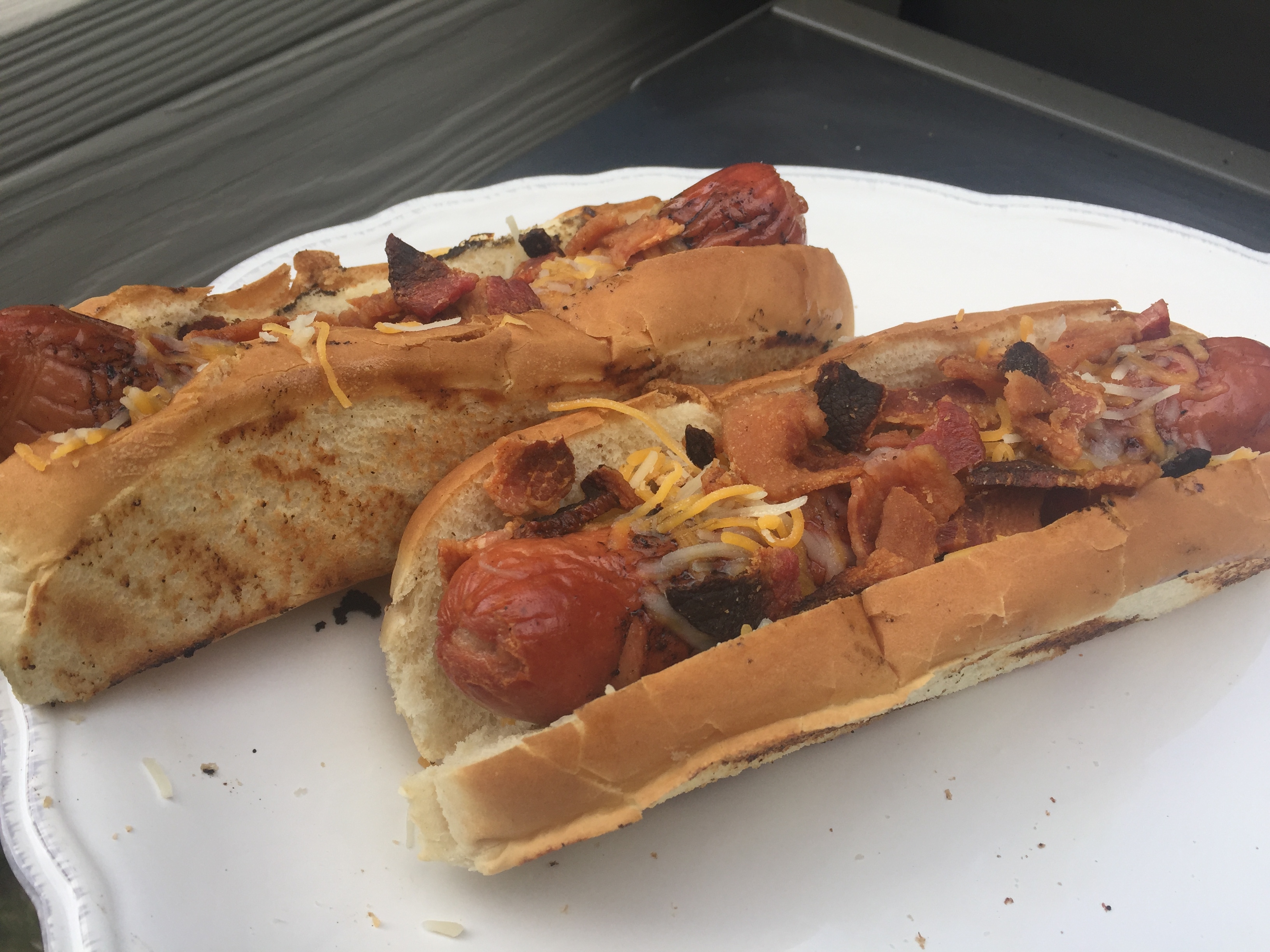
My informal take for that night: 2 dozen clams on the half shell, 3 hot dogs, 1 order of french fries, 2 lobster rolls, 1 order of fried clams & a pineapple drink to wash it down.

I am blessed to have enjoyed Alan’s company and fellowship for 5 decades. It should seem wrong to single out one episode and place it above others. Well… I have been wrong in other matters, but I choose this night to highlight.

Today? It’s a steamy June evening, and I am drawn back to that summer evening from years ago, a simple evening really, when Alan and I just could revel in the moment. Sharing time with Jacques, telling stories & observations and laughing… laughing. Oh, yes… and tucking into Jimmies of Savin Rock’s finest. And lest you think otherwise, Alan & Jacques were not mere spectators in this culinary debauchery. Although I did not play close attention to their levels of consumption, I know that we were all on par after the initial round of clams.

A memory sweet for me, and forever fresh.

Posted in Family | Leave a comment

Mom’s Yartzheit

In many ways Sandy is a blessing in my life. Sandy pays close attention to honoring the memory of her family members that have passed away. And she has been kind enough to add Mom, Dad & Mommie Soph to the list of departed family… family to be honored with the lighting of a memorial candle (and an extra candle to the memory of an unknown Holocaust person who may not have someone to light a candle).

And tonight I will light a candle to Mom’s memory (and also to a Holocaust victim). If the date is incorrect, it is only because I have given Sandy an incorrect date to enter into her calendar. Regardless, a candle will be lit.

And I think I am going to peruse my “memory shelf” and select an item to take down, dust off and turn into the light.

Let’s see… this is something small. And it also included Mommie Soph and Bessie. Location: Mom’s bedroom. Time: late evening, after 10:00pm & certainly around my bedtime. That old TV in the room was probably on. And the ladies were sharing a favorite 25 Alston Ave night time snack. A buttered Kaiser roll with sardines, onion & tomato.

This, by the way, was not a single occurrence event. I watched it unfold several times. I had no interest in this concoction initially, but their enjoyment of this snack became too seductive. And there came an evening that I asked for a sandwich to be prepared for me, too. Although my first dip into these waters may have been sans sardines. Eventually I came around to the full sandwich. And honestly, I can’t recall having it since.

Posted in The Small Pictures | Leave a comment